UX Y'all Conference

UX Y’all is an annual UX conference hosted by Triangle UXPA and organzied entirely by volunteers. With hundreds of attendees and many moving parts, even small operational details need thoughtful planning.

I was responsible for coordinating swag and badge assembly—making sure materials were organized, accurate, and ready without adding unnecessary stress for volunteers or the team.
Location

Raleigh, NC

Founded

2018

Industry

UX Design

Challenge

In previous years, swag assembly had a habit of becoming chaotic near the finish line. Volunteers weren’t always sure what came next, assembly space was limited, and last-minute pressure made mistakes more likely.

With 400+ attendees and multiple sponsor items involved, I wanted to create a process that felt clear and easy to follow.

Big Question:

How can we make swag and badge assembly simple enough that volunteers can jump in and feel confident right away?

My Role

I owned the process from start to finish, including:

  • Planning the workflow and setup

  • Coordinating materials, space, and timing of deliveries

  • Building in quality checks

  • Adjusting plans as constraints changed

Planning the Process

Instead of treating this as a last-minute task, I approached it like a production workflow.

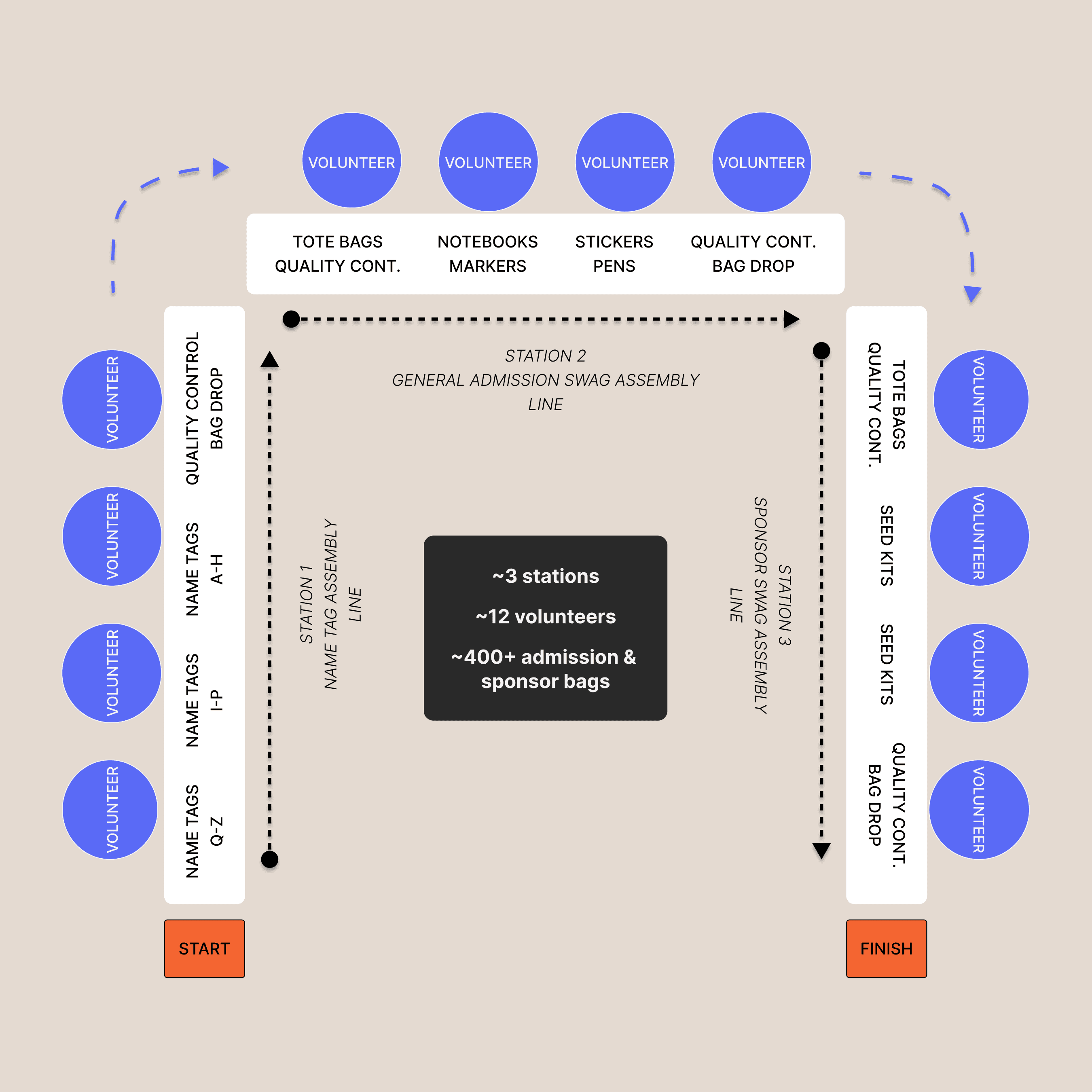
I mapped out each step using a simple assembly-line approach and translated it into a physical setup volunteers could follow without much explanation.

What mattered most:

  • Keeping steps simple and repeatable

  • Giving each station one clear responsibility

  • Organizing badges alphabetically to support check-in

  • Visualizing the setup so everyone understood the flow

This upfront planning made it much easier for volunteers to plug in and stay focused.

Instead of treating this as a last-minute task, I approached it like a production workflow.

Back to the basics; I mapped out each step using a simple assembly-line approach and translated it into a physical setup volunteers could follow without much explanation.

What mattered most:

  • Keeping steps simple and repeatable

  • Giving each station one clear responsibility

  • Organizing badges alphabetically to support check-in

  • Visualizing the setup so everyone understood the flow

This upfront planning made it much easier for volunteers to plug in and stay focused.

Testing & Adjustments

We didn’t have the resources for a full rehearsal, so I tested a smaller version of the setup using stand-in materials.

This helped me understand:

  • How long each step took

  • Where things slowed down

  • How to balance volunteer workload

Risk management: what would happen if we didn't have enough volunteers the day of assembly? With that in mind, I created scaled flows to adjust to the number of people working the assembly line.

We didn’t have the resources for a full bag assembly run through, so I tested a smaller version of the setup using stand-in materials.

This helped me understand:

  • How long each step took

  • Where things slowed down

  • How to balance volunteer workload

Risk management: what would happen if we didn't have enough volunteers the day of assembly? With that in mind, I created scaled flows to adjust to the number of people working the assembly line.

Mock assembly line diagram: full team of 12 volunteers
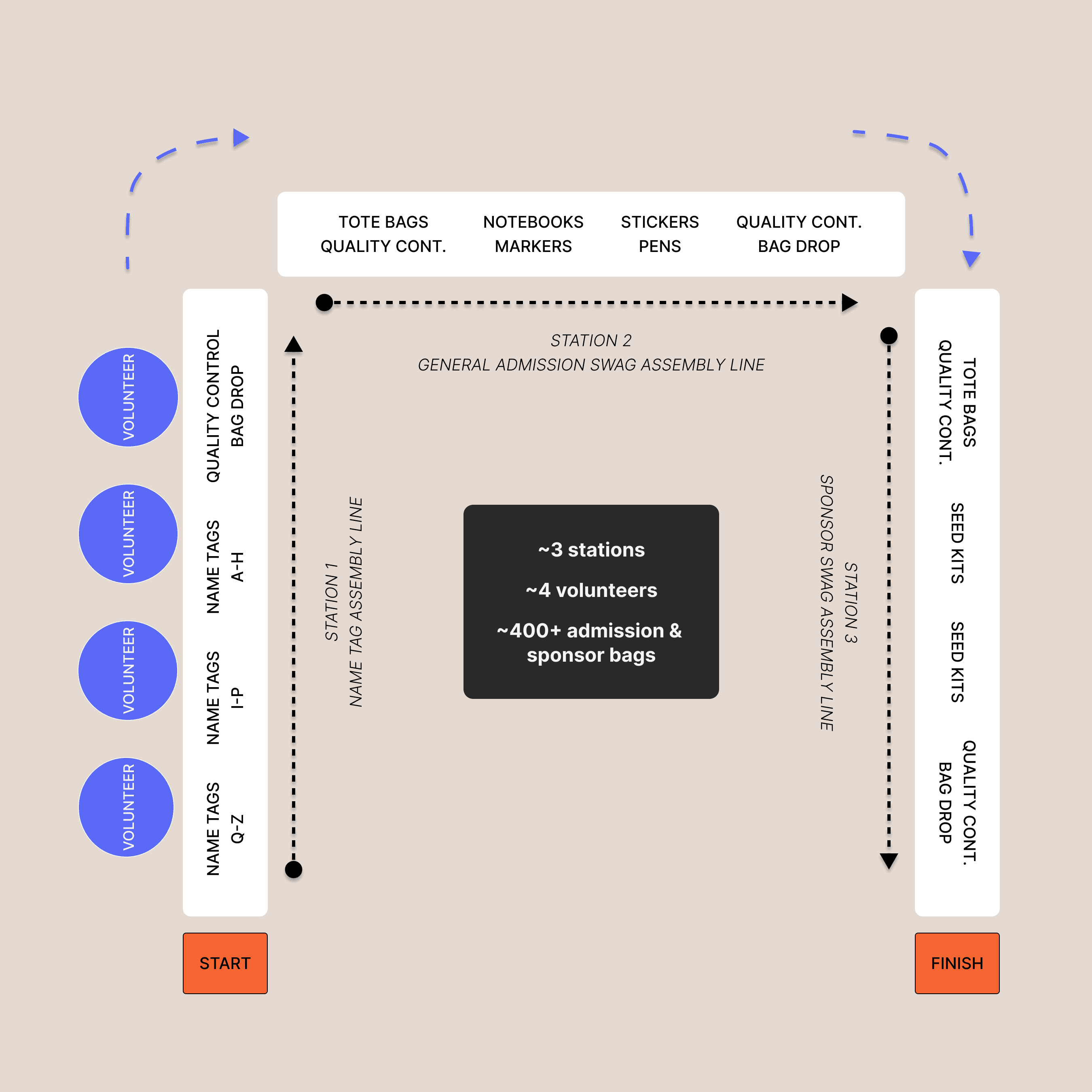
Mock assembly line diagram: team of 4 volunteers

When Plans Change

A few weeks before the conference, the marketing budget was cut significantly. Most of the planned swag had to be dropped so funds could support production, speakers, and tech needs.

The original setup was suddenly more than we needed—but the thinking behind it still mattered.

A few weeks before the conference, the marketing budget was cut by about 90%. Most of the planned swag budget had to be re-allocated to support production, speakers, and tech needs.

The original setup was now more than we needed—but the thinking and strategy behind it still mattered.

Adapting the Plan

Rather than starting over, I scaled things down.

Badge Assembly:

  • Kept everything alphabetical

  • Broke badges into smaller groups for faster check-in

Swag Distribution: tUsing leftover items from the previous year, we made tiered swag bags with 2 volunteers working a single assembly line.

  • Raffle winners received general items

  • Bronze sponsors received general items plus a notebook

  • Silver sponsors received bronze items plus a bottle opener

  • Gold sponsors received all items plus cable management

To keep things simple:

  • Pens were available at registration

  • Stickers and postcards were tucked directly into badge

Rather than starting over, I scaled things down.

Badge Assembly:

  • Still kept everything alphabetical

Swag Distribution: Using leftover items from the previous year, the team and I created tiered swag packages:

  • General items provided to all attendees

  • Raffle winners received donated items from our sponsors

  • Bronze sponsors received general items plus a notebook

  • Silver sponsors received bronze items plus a bottle opener

  • Gold sponsors received all items plus cable management

To keep things simple:

  • Pens were available at registration

  • Stickers and postcards were tucked directly into the badge

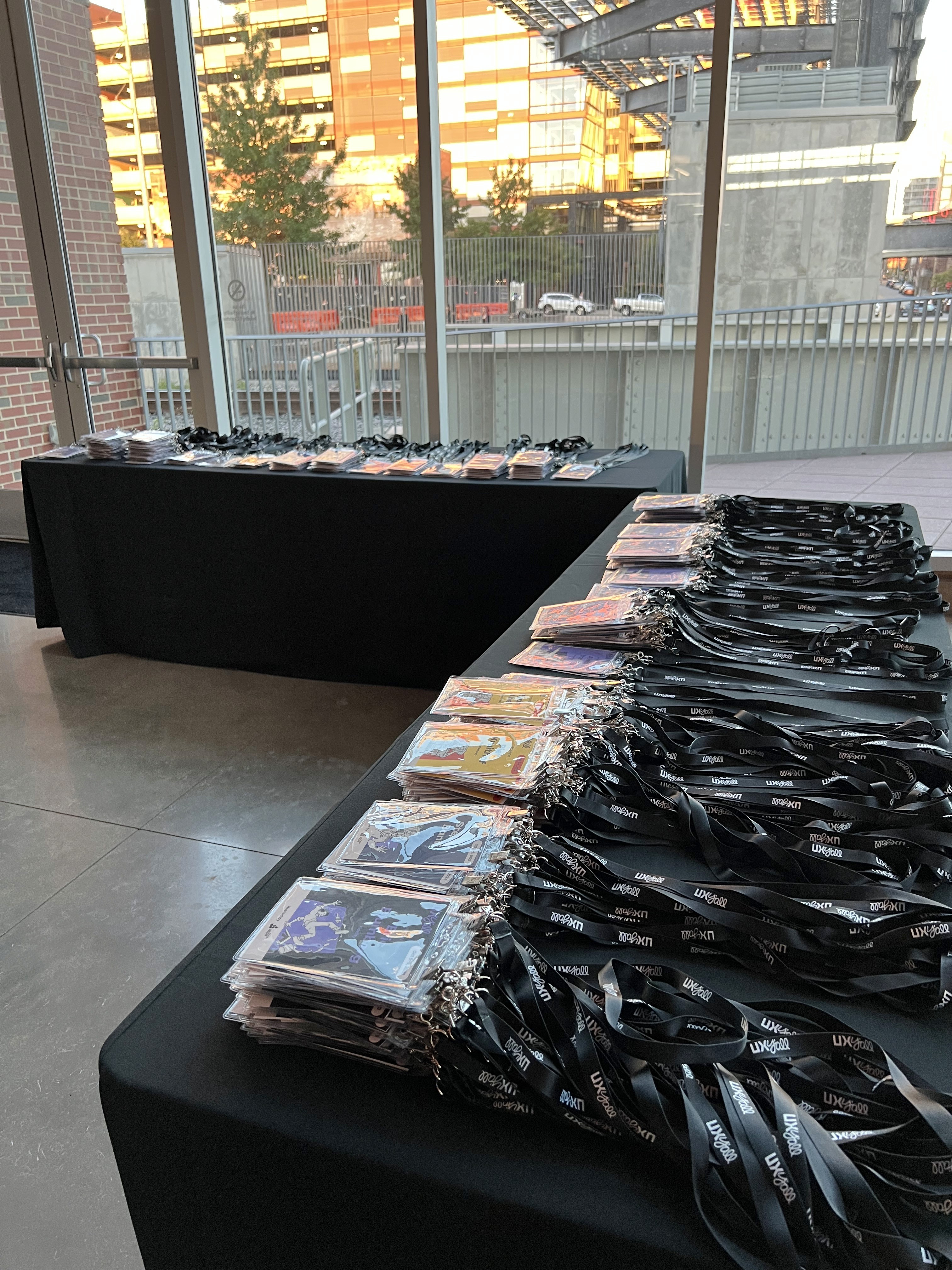
Finished badges grouped and ready for check-in
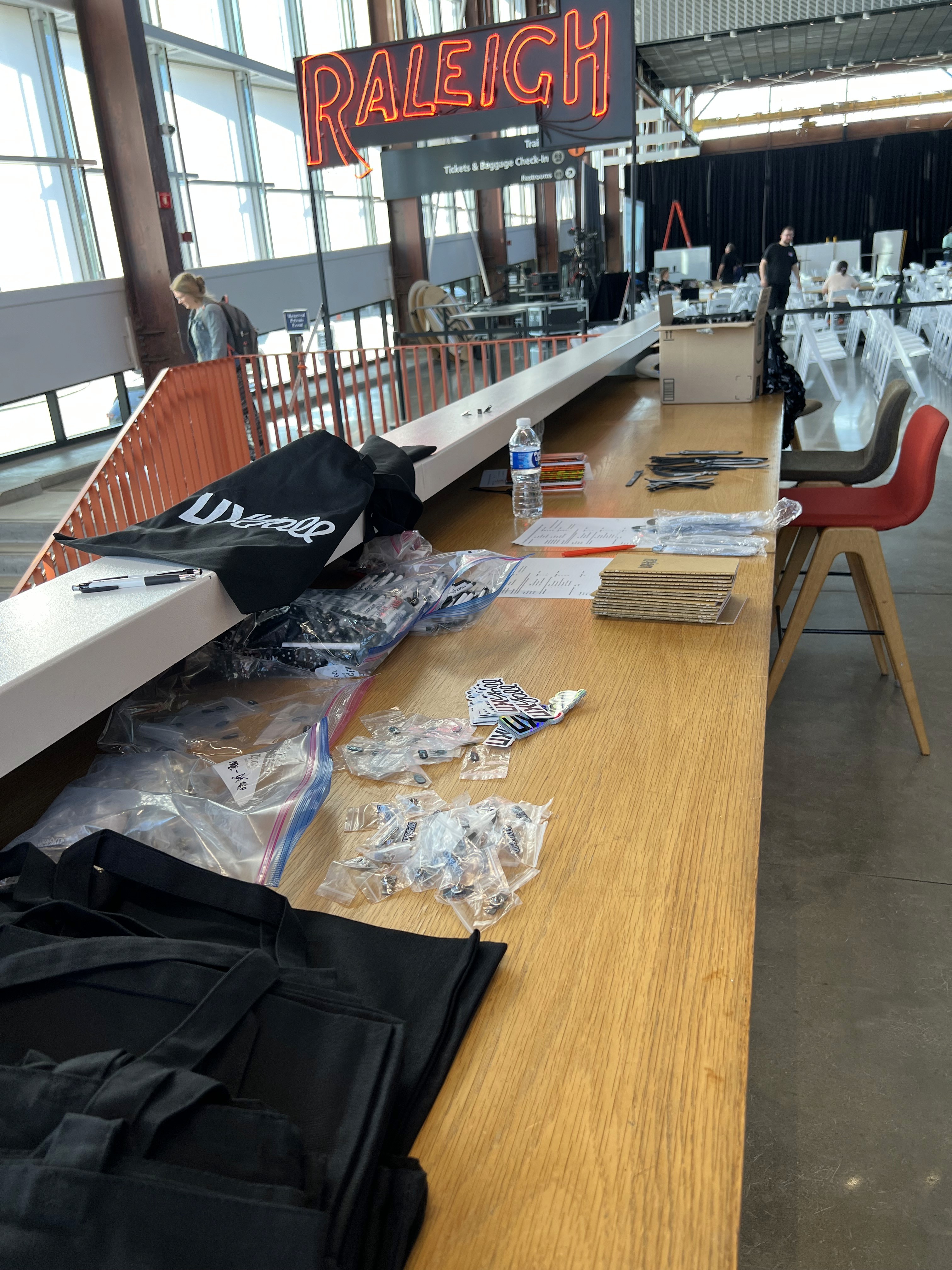
Our single assembly line at the event space

Results

  • Volunteers had clearer roles and less confusion

  • Swag and badges were ready on time and accurately assembled

  • Registration moved faster on event day

  • Sponsor value was maintained despite reduced resources

  • Waste was minimized by using existing materials

What I learned

This project reinforced how important flexibility and backup planning are—especially on volunteer-run teams with and fluctuating budgets.

Because our budget for swag was cut tremendously, I planned that next time I would:

  • Prepare a list of lower-budget backup items that could be ordered quickly

  • Leave more buffer for last-minute changes

Day of conference: we did it, y'all!

Create a free website with Framer, the website builder loved by startups, designers and agencies.